The care benefit that doesn’t look at your savings
If you are over State Pension age and need help with care because of an illness or disability, Attendance Allowance pays a weekly amount — and it does not depend on your savings or income. Many who qualify never apply.
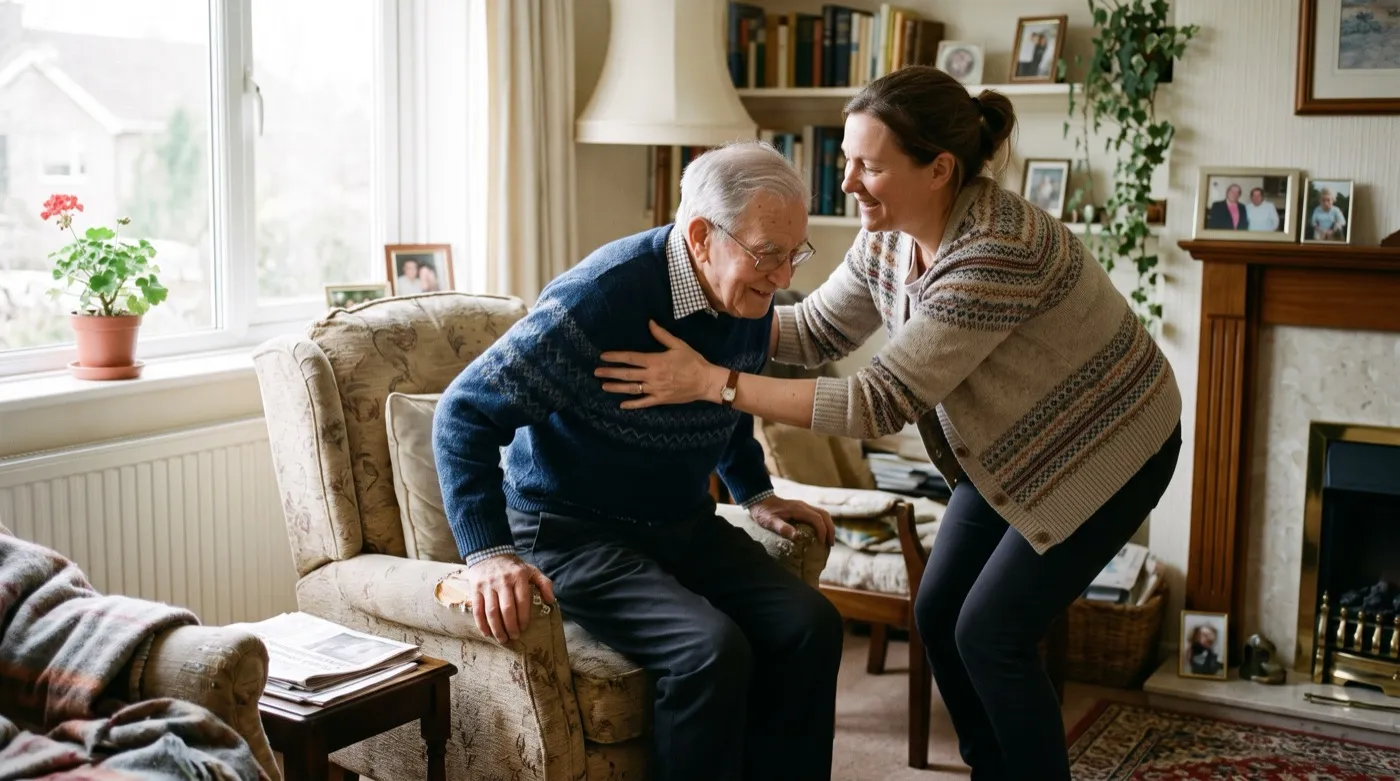
Many people reach later life managing a little less easily than they used to. Getting dressed takes longer, a bath feels risky, or a worry about leaving the cooker on creeps in. What fewer people realise is that there is a tax-free weekly benefit designed for exactly these situations, and that it does not look at your savings or income at all.
Attendance Allowance is often overlooked because people assume it is only for those with a full-time carer, or that it is means-tested. Neither is true. This guide explains how it works in general terms. It is not a judgement on your own situation, which only the official process can assess.
A filled square marks the next date. The day counts are recalculated each day from today’s date.
What Attendance Allowance is
Attendance Allowance is a benefit for people who are over State Pension age and who need help with personal care, or need someone to keep an eye on them for their safety, because of a physical or mental health condition or disability. That can include things like a long-term illness, a sensory impairment, a mobility problem, or memory difficulties.
The key idea is the help you need, not the help you currently receive. You do not need to already have a carer. Plenty of people manage alone, or with occasional help from family, and still have care needs that the benefit recognises.
The two rates for 2025/26
There are two weekly rates, depending on when you need help. For the 2025/26 tax year they are:
| Rate | When help is needed | Weekly amount |
|---|---|---|
| Lower rate | Help needed by day or by night | £73.90 |
| Higher rate | Help needed by day and night, or if terminally ill | £110.40 |
Which rate, if any, applies to a particular person is decided by the DWP after assessing the information on the claim. The table shows the published rates, not what any individual will be awarded.
It is not means-tested
This is the point that surprises people most. Attendance Allowance does not depend on your savings, your income or your property. A person with a comfortable private pension and savings can be awarded it on the same basis as someone with very little. It is also tax-free, so it does not add to your taxable income.
Because of this, it is one of the few pieces of support where there is little reason to hold back because of money. The question is simply about the care or supervision you need.
What counts as care or supervision
“Personal care” is wider than people expect. It is not only about washing and dressing. In general terms, the help you need might include:
- Getting in and out of bed, or on and off the toilet.
- Washing, bathing, dressing or managing continence.
- Eating and drinking, or taking medication correctly.
- Communicating, where hearing, sight or memory is affected.
- Supervision, so that you are not at risk of harming yourself, for example because of confusion or a risk of falls.
Where a condition makes any of these difficult, or dangerous without someone nearby, it may be relevant. You do not have to have a formal diagnosis for every difficulty, but the form asks you to describe how your condition affects you in everyday life.
The six-month rule
As a general rule, your care needs must have been present for around six months before you can be paid the benefit. That does not mean you wait six months to start your claim in every case; it is about how long the needs have existed. There are special fast-track rules if you are terminally ill, designed so that support is not delayed. If this applies to you or someone close to you, the official guidance explains the route.
How it can boost other help
Attendance Allowance can also affect other benefits in a helpful way. Being awarded it can increase what you receive from means-tested support, because it can bring in a disability premium. In practice, that can mean a higher amount of Pension Credit, Housing Benefit or Council Tax Reduction.
That is why it is worth looking at the whole picture rather than each benefit alone. An award in one place can change the result in another, so it is sensible to tell the relevant offices about any change in your circumstances.
How to claim
You claim using the AA1 claim form, which you can get through GOV.UK. The form asks you to describe the help you need, and when, in your own words. Some people find it easier to fill it in with a relative, a friend, or a local advice service, and that is perfectly fine.
A few practical tips that most guidance agrees on:
- Think about your worst days, not just your good ones.
- Describe what you need help with, even if you currently manage in a difficult way.
- Keep a copy of what you send.
As ever, this site does not process claims and will never ask for your National Insurance number, Government Gateway details or bank details. Use the official GOV.UK route only.
If you are under State Pension age
Attendance Allowance is for people over State Pension age. If you are younger and need help because of a long-term condition, the equivalent benefit is Personal Independence Payment (PIP), which has its own rules and assessment. If you care for someone else yourself, you may also want to read about Carer’s Allowance in later life, which is a separate benefit for the person doing the caring.
Worth a proper look
If everyday tasks have become harder, either for you or for someone you love, it costs nothing to read the official guidance and see whether Attendance Allowance could apply. Whether it does depends entirely on the care and supervision needs that are described and assessed, and no article can decide that for you.
This is general information, not advice; rates shown are illustrative for 2025/26 and can change, so please check GOV.UK for your own circumstances.
Official sources
- GOV.UK — Attendance Allowance — who can get it and the current weekly rates
- GOV.UK — Attendance Allowance: how to claim — the AA1 form and the official claim route
- GOV.UK — Personal Independence Payment (PIP) — the equivalent benefit below State Pension age
This is private, sponsored information published by Haldi Media OÜ on shianchi.com. It is not the DWP, HMRC, the Pension Service or any other government body, and it has no connection to them. Nothing here is financial, tax or legal advice, and no figure in this article is a promise or an entitlement for any reader: the amounts and dates were checked against the official sources cited on and can change. We do not process any claim or charge any fee. Never give your National Insurance number, Government Gateway details or bank details to a website in response to an article. For your own situation, check GOV.UK, call the Pension Service on 0800 731 0469, or get free guidance from MoneyHelper.
 The Monday Diary
One short email on a Monday with what’s paid, what’s due and what changes that week for pensioners and their families, plus one rule explained with its official source. It’s free and you can unsubscribe from any email.
 Benefits